What Happens During a Professional Mold Inspection in Southwest Florida
If you've never had a mold inspection before, it's easy to picture something dramatic — a crew showing up in hazmat suits, tearing apart your walls, and handing you a terrifying report.
The reality is much more straightforward.
A professional mold inspection is a methodical, non-invasive process designed to give you accurate information about the condition of your home. Here's exactly what to expect when SWFL Mold Pros walks through your door.
Why Southwest Florida Is Different
Before getting into the process, it helps to understand the environment we're working in.
Southwest Florida's climate — high humidity, frequent rain, intense heat, and a long stretch of homes that sit unoccupied during the off-season — creates conditions that are unusually favorable for mold growth. Moisture problems that might take months to develop in a drier climate can progress significantly faster here.
This is especially relevant for seasonal homeowners. A home that's been closed up from May through October, with limited airflow and potential HVAC issues, can develop hidden moisture problems that aren't visible on the surface.
A professional assessment accounts for all of this. A DIY kit does not.
What a Professional Mold Inspection Includes
1. Initial Walkthrough and Client Interview
Every inspection starts with a conversation. Before touching anything, we want to understand the history of the property:
Have there been any water intrusion events — leaks, flooding, roof issues?
Have occupants noticed musty odors or experienced unexplained symptoms?
Has there been any previous mold remediation?
How long has the property been vacant, and what was the HVAC doing during that time?
This information directly shapes where we focus our attention. Mold follows moisture, and moisture has a history.
2. Visual Inspection of the Full Property
The visual inspection is the foundation of the assessment. We move systematically through the property, examining areas that are statistically more likely to harbor moisture problems:
Bathrooms and kitchens — grout lines, under sinks, around fixtures
Attic spaces — roof decking, insulation, ventilation
Air handler and HVAC components — coil housing, drain pans, ductwork connections
Windows and sliding doors — frames, sills, and seals
Laundry areas — behind appliances, wall penetrations
Garages and utility spaces
Any areas with reported or visible water staining
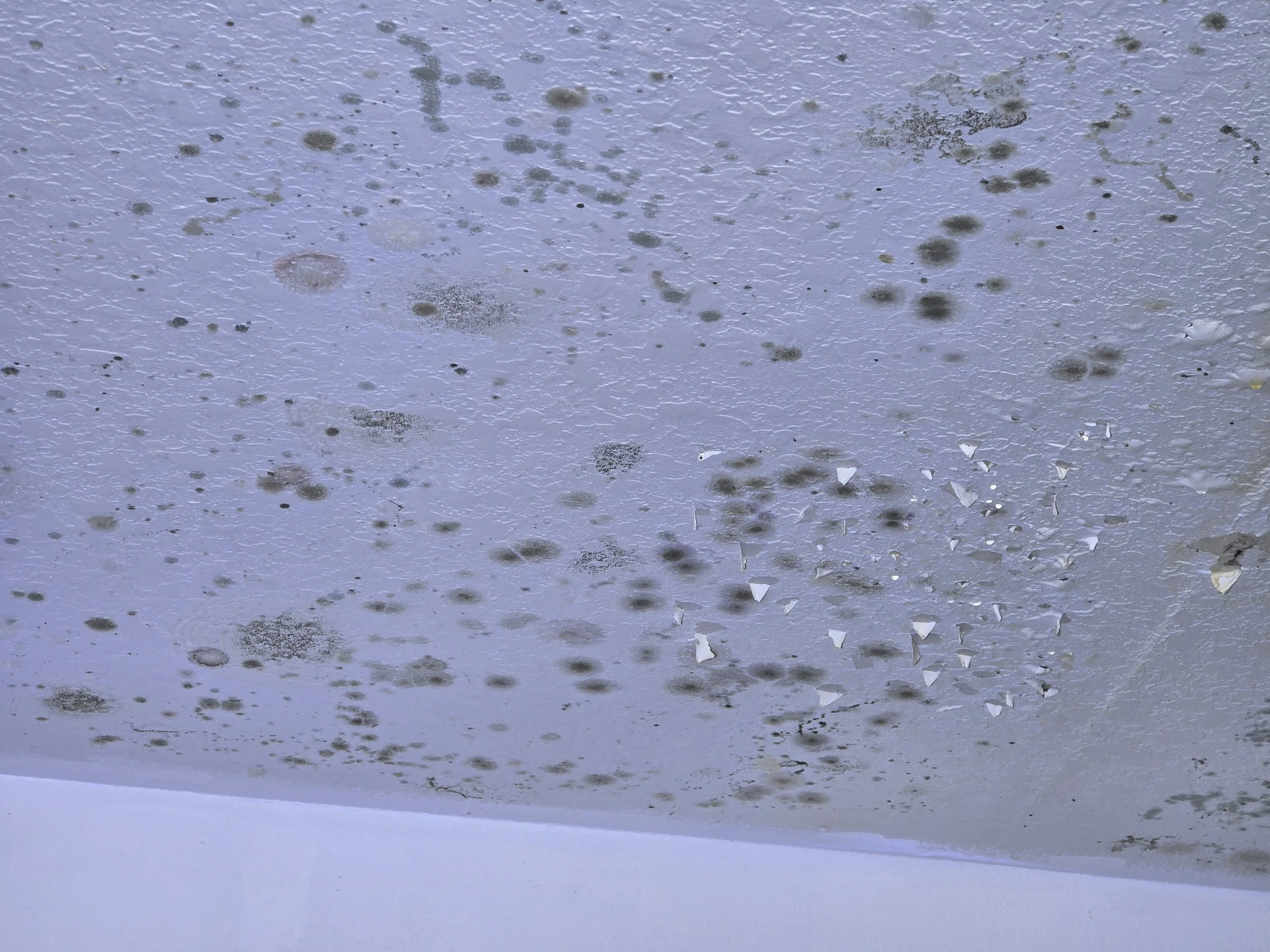
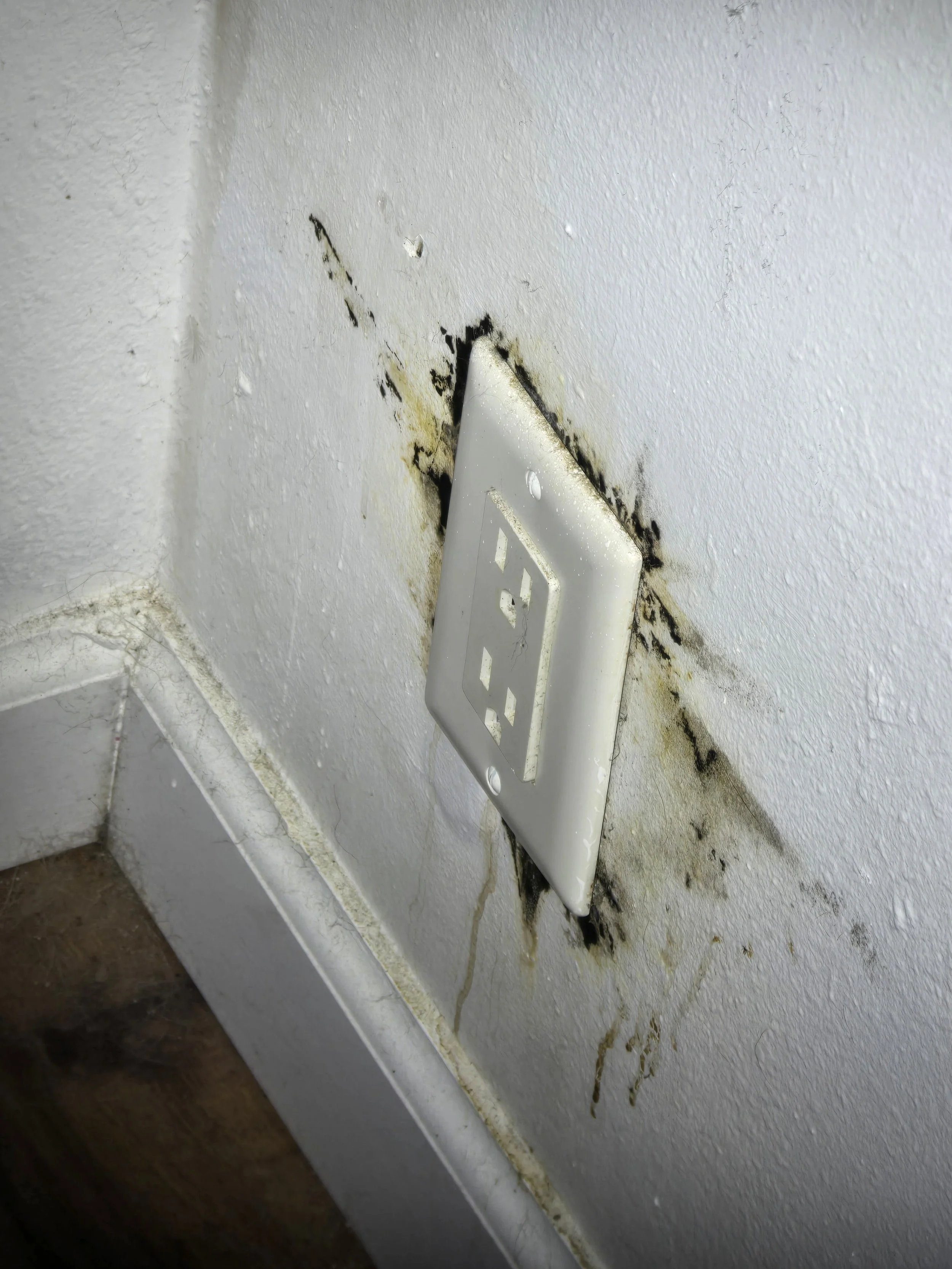
We're looking for visible mold growth, water staining, discoloration, surface deterioration, and any conditions that suggest ongoing or past moisture intrusion.
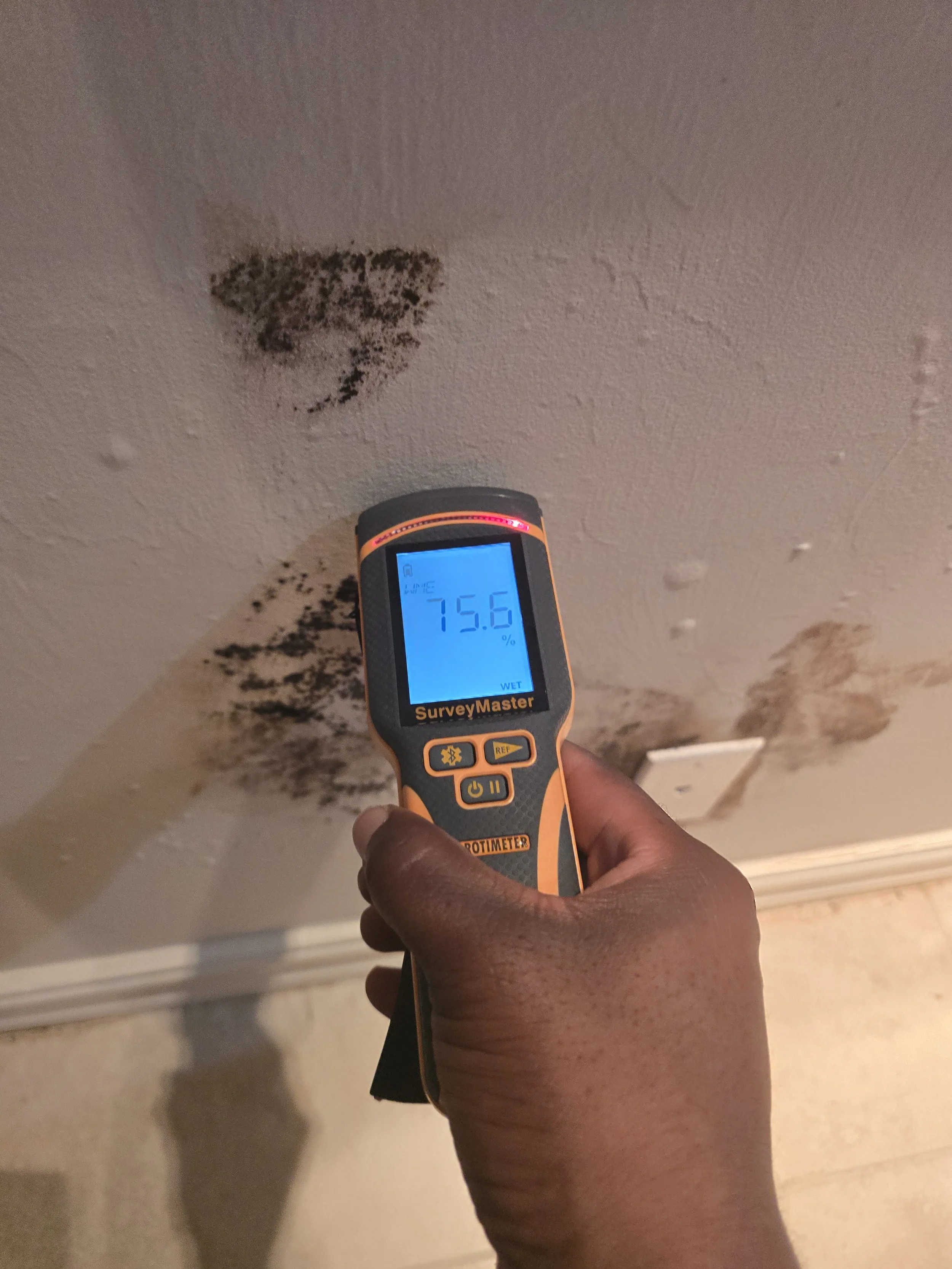
3. Moisture Mapping
Visible mold is only part of the picture. Some of the most significant moisture problems are hidden behind drywall, under flooring, or inside wall cavities — completely invisible to the eye.
We use calibrated moisture meters to measure the moisture content of walls, ceilings, and floors throughout the property. Elevated readings in unexpected areas are often the first indicator of a concealed problem that hasn't yet become visible.
This step is what separates a professional inspection from a surface-level walkthrough.
4. Air Sampling
Air quality sampling gives us objective, laboratory-confirmed data about what's actually present in the indoor environment.
Using calibrated pumps and certified collection cassettes, we draw air samples from key locations throughout the home. We also collect an outdoor control sample — this is critical, because mold spore levels only become meaningful when compared to what's naturally present outside.
Samples are sent to an accredited third-party laboratory for analysis. Results typically identify:
Which types of mold spores are present
The concentration of spores at each sample location
How indoor levels compare to the outdoor baseline
It's worth noting: air samples represent conditions at a specific point in time. They are one data point in a broader assessment — not a standalone verdict. We interpret results in context, alongside visual findings and moisture data.
5. Surface or Bulk Sampling (When Warranted)
If a visible suspect area is identified during the visual inspection, we may collect a surface tape lift or swab sample from that specific location. This confirms whether the growth is in fact mold, and identifies the species present.
Surface sampling is not always necessary — it depends on what we find during the inspection.
6. Documentation and Reporting
Following the inspection, we compile a written report that includes:
Findings from the visual inspection, with photographs
Moisture readings and locations
Laboratory results with interpretation
A clear summary of conditions observed
Recommended next steps, where applicable
If mold or significant moisture issues are identified, we outline what needs to be addressed. When professional remediation is warranted, we can connect you with a licensed remediation professional — we do not perform remediation ourselves, which means our assessment is always objective and free of any financial conflict of interest.
How Long Does It Take?
Most residential inspections take between 1 and 2 hours, depending on the size of the property and what we find along the way. Laboratory results are typically returned within 24 to 48 hours, after which the full written report is delivered.
What You Should Do Before the Inspection
To get the most accurate results, a few simple things help:
Run the HVAC system normally for at least 24 hours before the inspection — don't clean or vacuum right before we arrive
Leave windows and doors closed for several hours prior, so air sampling reflects actual indoor conditions
Note any areas of concern you've observed so we can prioritize them
Be present or available by phone if possible — your knowledge of the property is valuable
Who Should Consider a Professional Mold Inspection?
A professional assessment is worth scheduling when:
You've had a water intrusion event of any kind
You're purchasing or selling a home
Your property has been sitting vacant for an extended period
Occupants are experiencing unexplained health symptoms
You've completed remediation and need clearance verification
You simply want documented peace of mind about your indoor environment
In a climate like Southwest Florida's, this isn't a niche concern — it's a reasonable part of owning or managing property here.
The Bottom Line
A professional mold inspection is not dramatic, invasive, or designed to alarm you. It's a structured, evidence-based process that gives you clear information about the condition of your home — so you can make informed decisions.
If you have questions about your property or want to understand what an inspection would involve in your specific situation, we're glad to talk through it.
SWFL Mold Pros provides independent mold inspections, air quality testing, radon testing, and post-remediation verification throughout Southwest Florida. As a third-party assessment company, we do not perform remediation — our findings are always unbiased.
Contact us to learn more or schedule an assessment.
SFWL Mold Pros
(239) 510-8878