Radon in Southwest Florida: The Test Most Homeowners Never Think About
Did You Know?
Radon is the second-leading cause of lung cancer in the United States after cigarette smoking and the leading cause among people who do not smoke. The EPA estimates that radon exposure contributes to approximately 21,000 lung cancer deaths each year. Because radon cannot be seen, smelled, or tasted, testing is the only way to determine the radon level inside a home.
Mold gets the attention in Southwest Florida, and for understandable reasons. It's visible, it produces odors, and the climate makes it a recurring concern. Radon is different. It has no smell, no visible presence, and no immediate symptoms. The only way to know whether it's present in a home is to test for it.
Most Southwest Florida homeowners have never had a radon test performed and have never been told they should consider one. That gap is worth closing, because the reasoning behind radon testing has nothing to do with whether a home looks or feels like it has a problem.
What radon is and where it comes from
Radon is a naturally occurring radioactive gas produced by the breakdown of uranium in soil, rock, and groundwater. It moves upward through soil and enters buildings through foundation cracks, slab penetrations, sump areas, and gaps around service pipes. Once inside, it can accumulate to levels higher than the surrounding outdoor air.
Radon levels vary significantly by geography and by individual property. Two homes on the same street can produce different results based on soil composition beneath them, foundation construction, and how the building is ventilated. That variability is precisely why testing is the only reliable method of determining a specific home's levels. There is no way to predict a result from a neighbor's test or from a general map.
The Florida context
Florida has areas where radon has been identified at elevated levels, and the state maintains a radon program through the Department of Health that certifies radon measurement professionals. Florida also has specific requirements around radon testing disclosure in certain real estate and rental contexts.
Southwest Florida's phosphate-bearing geology in parts of the region is one factor that has drawn attention to radon in the state. But the practical point for a homeowner is simpler than the geology: elevated radon has been documented in Florida homes, testing is inexpensive relative to most home services, and the result either gives you peace of mind or identifies something worth addressing.
A common misconception: many people associate radon with basements and assume slab-on-grade construction common in Florida eliminates the concern. Radon enters through any ground contact point, including slab foundations. The absence of a basement does not mean the absence of radon.
How radon testing works
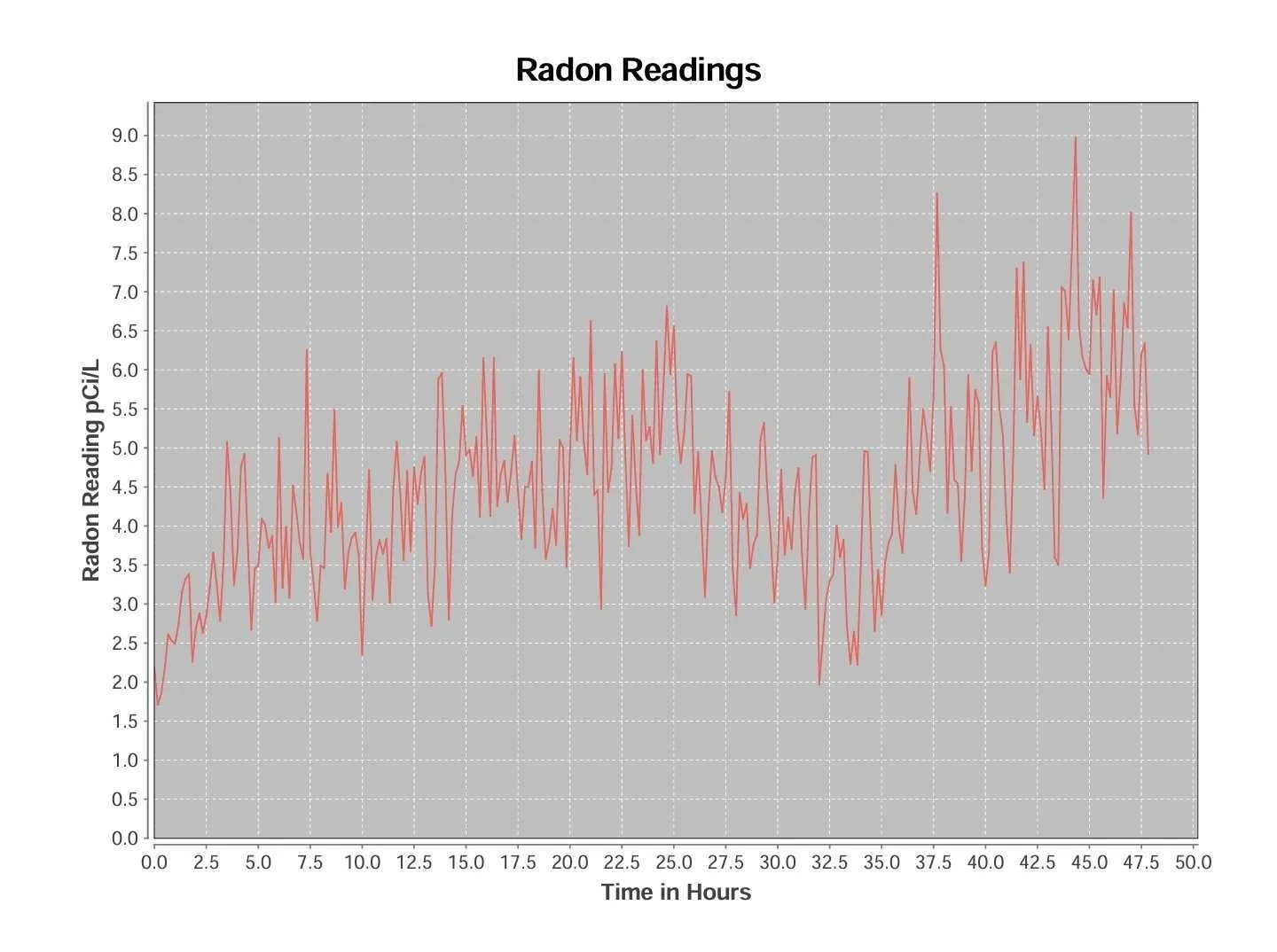
Radon testing measures the concentration of radon gas in indoor air over a defined period. Short-term tests typically run from two to seven days, using either passive collection devices or continuous monitors placed in the lowest lived-in level of the home. Long-term tests run 90 days or more and provide a more accurate picture of average annual exposure, since radon levels fluctuate with weather, season, and how the home is ventilated.
During a short-term test, closed-house conditions are maintained: windows and exterior doors stay closed except for normal entry and exit, and the HVAC system operates as it typically would. Those conditions matter because they produce a measurement that reflects how the home actually performs rather than an artificially ventilated snapshot.
2-7 days
Typical short-term test duration
90+ days
Long-term test for annual average
4.0 pCi/L
EPA action level for mitigation
Understanding your results
Radon results are reported in picocuries per liter, abbreviated pCi/L. The Environmental Protection Agency has established 4.0 pCi/L as the action level at which mitigation is recommended. Results below that threshold are generally considered acceptable, though the EPA notes that no level of radon is entirely without risk and that reduction may be worth considering between 2.0 and 4.0 pCi/L.
A result above the action level does not require immediate evacuation or panic. Radon mitigation is a well-established process, typically involving a sub-slab depressurization system that vents soil gas above the roofline before it can enter the living space. Mitigation systems are effective and generally straightforward to install in most residential construction.
When Southwest Florida homeowners should test
The most common trigger is a real estate transaction. Buyers increasingly request radon testing during the inspection period, particularly on properties where the seller cannot provide prior test results. Testing during the inspection period gives the buyer information while there is still time to negotiate or address findings.
Beyond transactions, testing makes sense for homeowners who have never tested, for homes where significant renovation has altered the foundation or ventilation, and for homes where a new HVAC system or building envelope improvement has changed how air moves through the structure. Tightening a building envelope, which is generally desirable for energy efficiency, can also reduce the natural ventilation that previously kept radon levels lower.
During a real estate transaction, on either side of the deal
Any home that has never been tested, regardless of age or construction type
After foundation work, major renovation, or slab penetration for plumbing or electrical
After a significant HVAC replacement or building envelope tightening
Every two years as a general practice, per EPA guidance for previously tested homes
Pairing radon with other environmental testing
For homeowners already scheduling a mold assessment or an indoor air quality evaluation, adding radon testing to the same visit is efficient. The equipment is placed during the assessment and collected at the end of the test period. For real estate transactions in particular, having both assessments documented in the same timeframe gives a buyer or seller a complete environmental picture of the property rather than a partial one.
Radon testing is one of the few environmental services where the answer is either reassuring or actionable, with very little ambiguity in between. That clarity is worth the modest investment it takes to get it.
Considering radon testing in Southwest Florida?
SWFL Mold Pros provides licensed radon testing across Naples, Fort Myers, Cape Coral, and surrounding communities, alongside mold assessment and indoor air quality services.