Short-Term Rentals and Small Commercial Properties: The Mold Risk Owners Don't Budget For
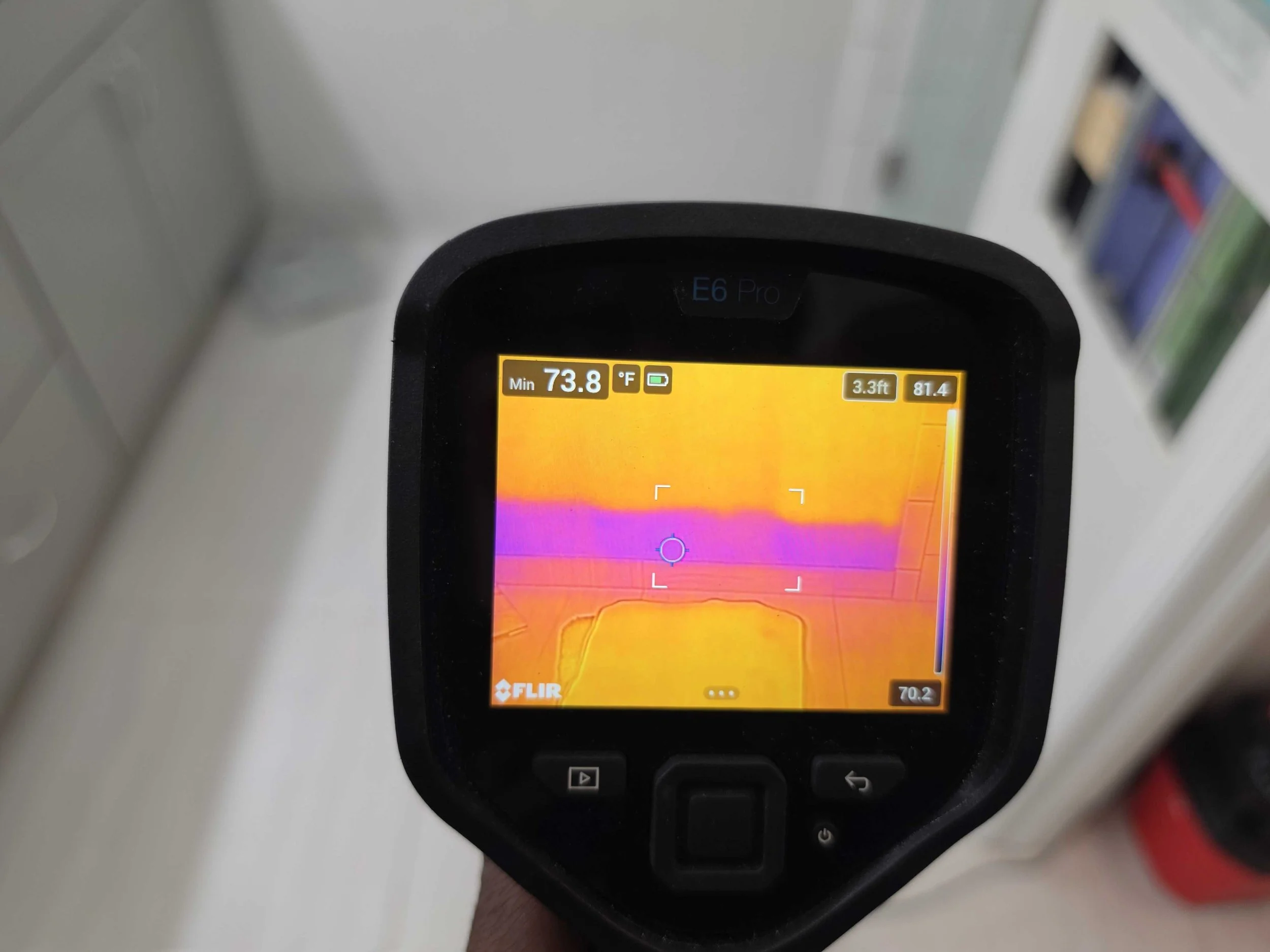
A property that someone lives in gets noticed. The owner smells the musty odor developing in the guest bathroom, sees the discoloration forming near the window, hears the AC struggling. Small changes register because someone is there daily to register them.
Short-term rentals and small commercial properties don't have that. They have gaps between occupants, cleaning crews focused on turnover speed rather than building condition, and owners who may be several states away. Conditions that would be caught in week one at an owner-occupied home can develop for months before anyone with the context to recognize them takes a close look.
Why vacation rentals carry different risk
Occupancy patterns in Southwest Florida vacation rentals concentrate heavily in the winter season and thin substantially in summer, which is precisely when the climate is most aggressive. A property that books solid from January through April and sits mostly empty from June through September experiences its highest-risk months with the least attention.
Guest behavior compounds this. Vacation renters run the AC lower than an owner would, creating larger temperature differentials and more condensation on cold surfaces. They take more showers, often without using exhaust fans they aren't familiar with. They leave sliding doors open. They report problems inconsistently, and when they do report them, the report goes to a property manager focused on guest satisfaction rather than building diagnostics.
The review problem: mold-related complaints in short-term rental reviews are disproportionately damaging. A guest who mentions a musty smell or visible mold in a public review affects bookings well beyond the individual stay, and the review typically cannot be removed. By the time a review surfaces the issue, the condition has usually existed through multiple prior stays.
The turnover cleaning gap
Cleaning crews between guests are working against a clock, typically a few hours to reset a property completely. They are cleaning surfaces, changing linens, and restocking supplies. They are not evaluating the condition of an air handler, checking a condensate drain line, or investigating why the closet in the second bedroom smells different than it did last month.
This is not a criticism of cleaning services. It's a description of scope. The gap between turnover cleaning and building condition monitoring is real, and in a Southwest Florida climate it's a gap where conditions develop.
Property owners who add a periodic building condition check, separate from turnover cleaning, close that gap. What that check involves is straightforward: HVAC condensate function, humidity readings, visual inspection of high-risk areas, and attention to any change in odor. It takes a fraction of the time a full assessment does and catches most developing conditions early.
Small commercial properties
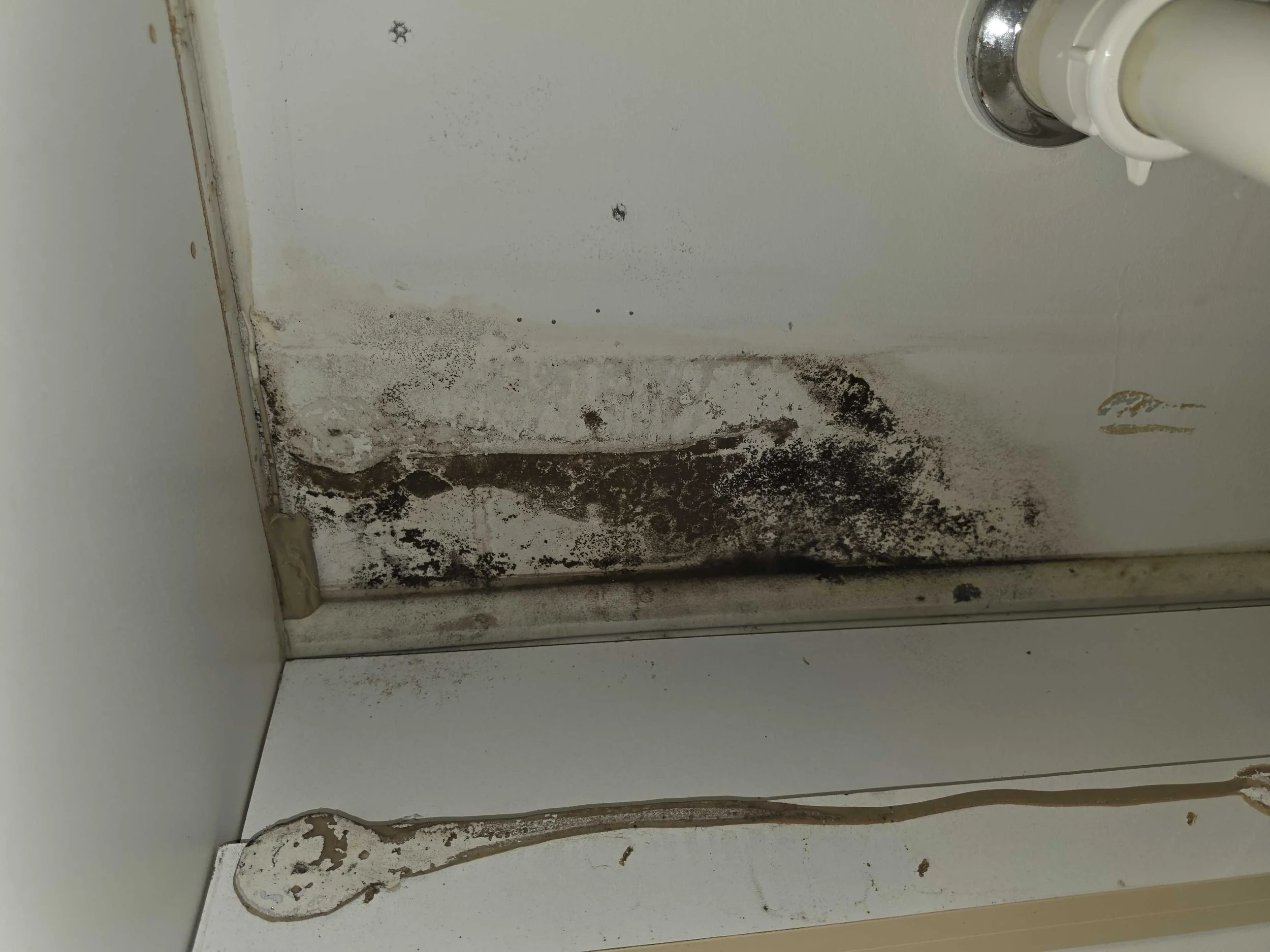
Small commercial buildings in Southwest Florida, including office suites, retail spaces, medical offices, and light service businesses, face a related but distinct set of factors.
Commercial HVAC systems often operate on schedules that reduce or eliminate operation outside business hours. A system that shuts down at 6 PM Friday and restarts at 7 AM Monday leaves the building unconditioned through the highest-humidity portion of a summer weekend. Over a season, that pattern produces measurable moisture accumulation in the building envelope and interior materials.
Commercial spaces also frequently have tenant improvement histories, meaning walls have been moved, plumbing has been relocated, and ceiling assemblies have been modified multiple times by different contractors. Each modification is a potential moisture pathway, and the documentation of those modifications is often incomplete.
The liability context differs as well. A commercial landlord has obligations to tenants, tenants have obligations to their employees and customers, and an indoor air quality complaint in a commercial setting can involve significantly more affected parties than a residential one.
HVAC systems that shut down outside operating hours through humid periods
Tenant improvement histories creating undocumented moisture pathways
Suspended ceiling plenums used as return air pathways
Break room and restroom plumbing serving multiple tenant spaces
Vacancy periods between tenants with minimal conditioning
What assessment provides in these contexts
For a short-term rental owner, an assessment establishes the property's current condition and creates documentation that has specific value if a guest complaint arises. A guest asserting that a property caused a health issue is a substantially different conversation when the owner can produce a recent assessment showing acceptable conditions than when the owner has nothing.
Assessment also protects the revenue side. Identifying and correcting a developing condition during a slow month is a scheduled expense. Discovering it through a guest complaint in peak season means canceled bookings, refunds, review damage, and emergency-priced remediation.
For a commercial property owner or manager, assessment serves both a due diligence and a tenant relations function. Documented indoor air quality supports lease negotiations, responds to tenant concerns with data rather than assurances, and establishes a baseline that distinguishes pre-existing conditions from those arising during a tenancy.
Timing that fits the business
For seasonal vacation rentals in Naples, Fort Myers, Marco Island, and Sanibel, the natural assessment window is late summer or early fall, before the season begins. That timing catches anything that developed during the low-occupancy summer months and allows correction before revenue-generating bookings start.
A second useful window is immediately after the season ends, establishing condition after a period of heavy use and identifying anything guest activity may have contributed.
For commercial properties, assessment timing typically aligns with lease transitions, planned tenant improvement work, or in response to a specific complaint. Assessing between tenants, while a space is empty and accessible, produces the most complete picture and the least disruption.
The economics
The argument for proactive assessment in these property types is not primarily about health, though that matters. It's about the asymmetry between the cost of knowing and the cost of not knowing.
An assessment is a defined, modest, schedulable expense. A mold condition discovered through a guest complaint during peak season, or through a commercial tenant's formal notice, carries costs that compound: remediation at emergency pricing, lost revenue during the work, refunds and concessions, reputational damage, and potential liability exposure. For income-producing property in Southwest Florida's climate, that asymmetry favors knowing.
Own a vacation rental or commercial property in Southwest Florida?
SWFL Mold Pros provides mold assessments and indoor air quality testing for short-term rental and commercial properties across Naples, Fort Myers, Cape Coral, and surrounding communities.